
“(A place which a king inhabited)… may have been any place possessed by him and used by him, anywhere within his territory. It might have been his family home or a fortification with strategic importance for the tuath. It might have been a ringfort, a crannog, or some other defensible or defended habitation. The royal site was that at which the ritual of the tuath, associated with the king of that tuath, took place – the inauguration, feasting, treaty-making and numerous other royal duties.” 1
It is difficult to define what exactly a ‘capital’ was in medieval Ireland. The above extract explains that there were two locations of importance associated with each kingdom, or tuath: the king’s physical residence, and the royal site. A good way to think of this is how the Irish Government operates today: Dáil Éireann could be equated with the royal capital where political matters are taken care of, but the king did not live in the royal capital just as the Taoiseach does not live in Dáil Éireann.
In Ireland, kings were chosen through a system called ‘tanistry,’ which differed from the typical father-to-son succession seen in other parts of Europe. In Gaelic society, the most suitable member of the derbfine – a kinship group made up of descendants from a common great-grandfather – would be elected as the next ruler or chieftain.2 This practice would result in the king’s residence changing with each new leader, although the royal site itself remained constant. The inauguration of these kings typically took place beneath a ceremonial Bile tree, like the one which likely existed in Billywood, Moynalty. During the ceremony, a Slat na Ríghe, or rod of kingship, would be cut from the tree and used as part of the ritual.3
Below are the capitals, or seat of power, of the kingdoms which would have had varying degrees of influence over north Meath and east Cavan during the medieval period.
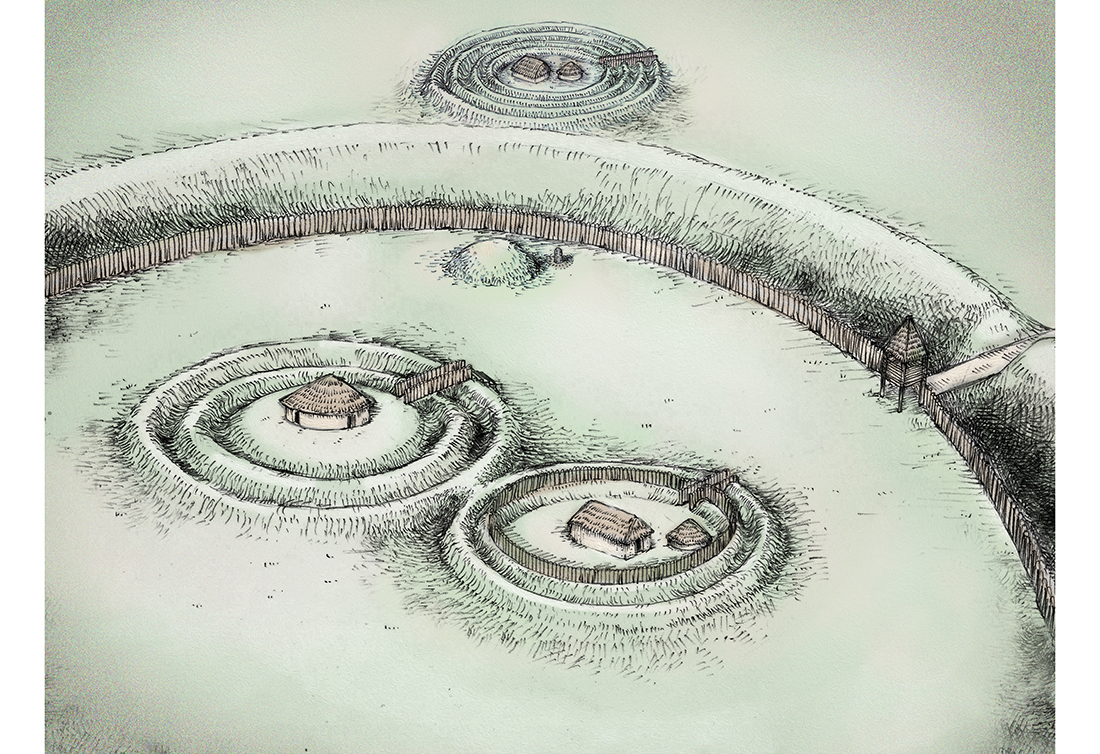
The Hill of Tara

The Hill of Uisneach
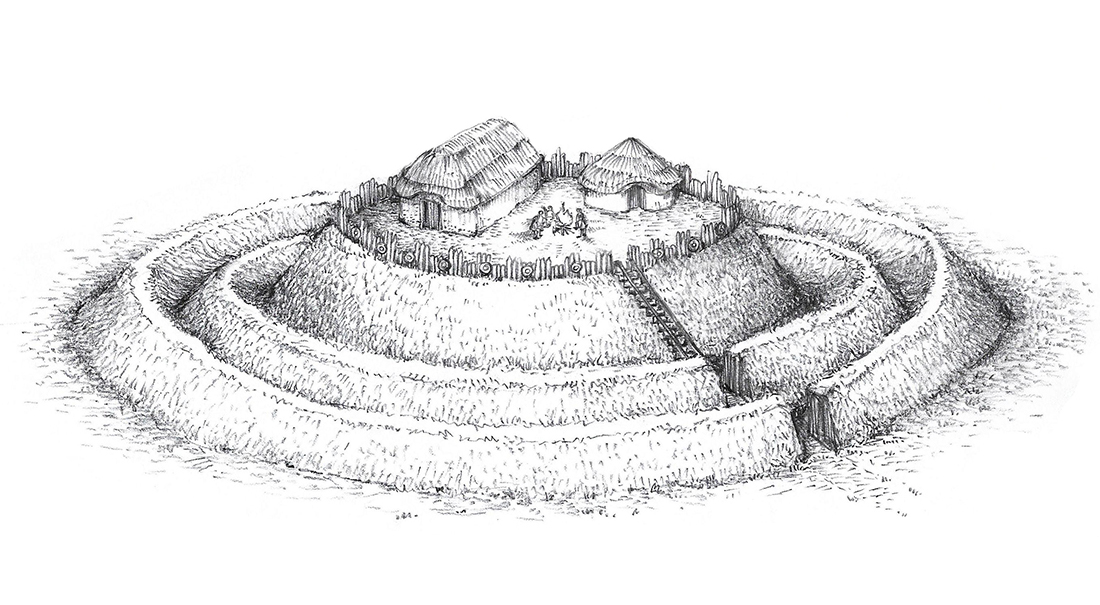
Dún na Sciath

Rath Airthir

Cnogba

Loch Gabhair

Tullymongan
References
- Richard B. Warner, ‘Clogher, an archaeological window on early medieval Tyrone and Mid-Ulster’ in C. Dillon & H. Jefferies (eds) Tyrone: History & Society (2000), p. 48
- Francis J. Byrne, Irish Kings and High Kings (Dublin 1973, 2001), pp. 35-37
- Elizabeth FitzPatrick, Royal Inauguration in Gaelic Ireland C. 1100-1600, A Cultural Landscape Study (Woodbridge, 2004), p. 58
 Beyond the Borora