
There were four principal groups of people that inhabited the North Meath/East Cavan area during the medieval period. These were the Gailenga, Mugdorna Breg, Fir Cúl Breg and Uí Raghallaigh.
The Gailenga were probably the earliest of these and were the most spread out, appearing in Cavan, Meath, Dublin and Mayo. They were generally client-kings of Uí Néill, but due to the constant infighting amongst the Uí Neill some Gailenga kings did manage to take the title ‘Rí Breg’, King of Brega, in the 11th and 12th centuries.1 The Gailenga competed with another equally ancient group called the Mugdornai for control of north Meath. The Mugdornai were originally subjects of the Ulaid and would have had an important role in defending the southern-most borders of Ulster when it extended as far south as the River Boyne.
Situated between the Mugdornai and Gailenga were the Fir Cúl Breg. These were a branch of the Uí Néill but never managed to claim the kingship of Brega for themselves. Instead, they appear rather frequently supporting a larger Uí Néill sept, the Uí Chonaing of Knowth. Fir Cúl Breg eventually fell out of Uí Néill hands and was taken over by the Gailenga, who in turn were replaced by the Uí Raghallaigh. The Uí Raghallaigh managed to retain a presence in Meath through an uneasy and often violent relationship with the Normans.
The borders of this patchwork of kingdoms was ever changing so it is very hard to accurately identify where one began and another ended. Most likely, the borders would shift from time to time and territory would be gained or lost.
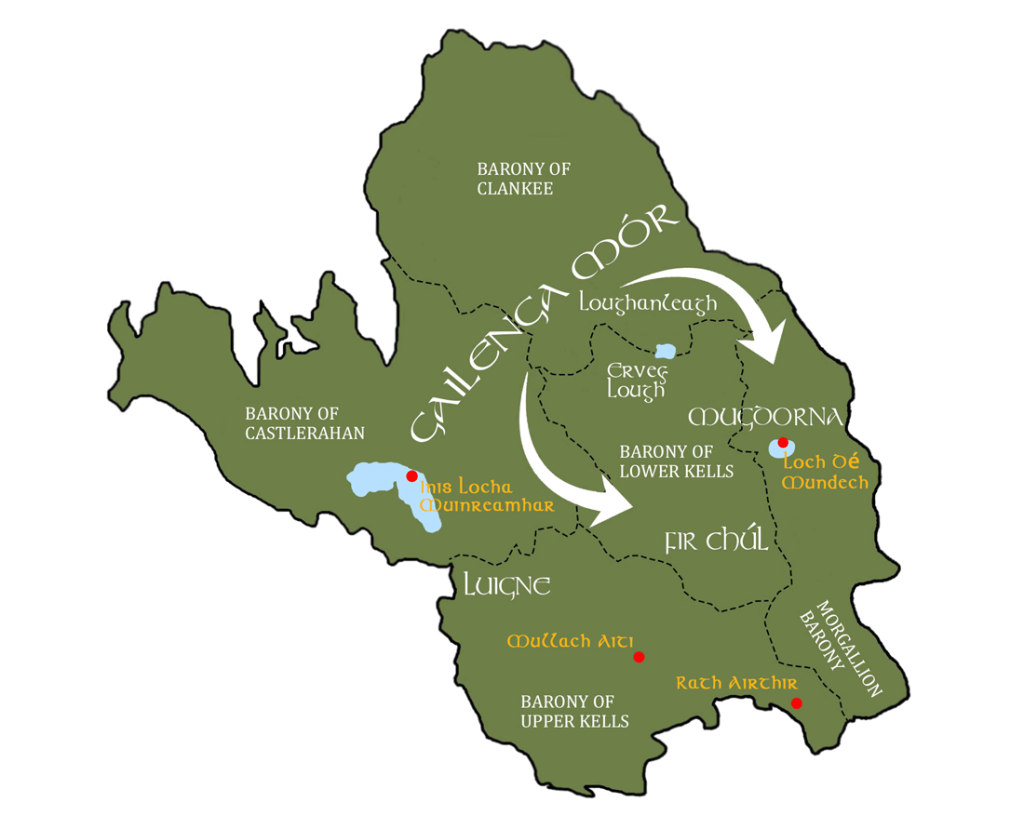
Gailenga Mór
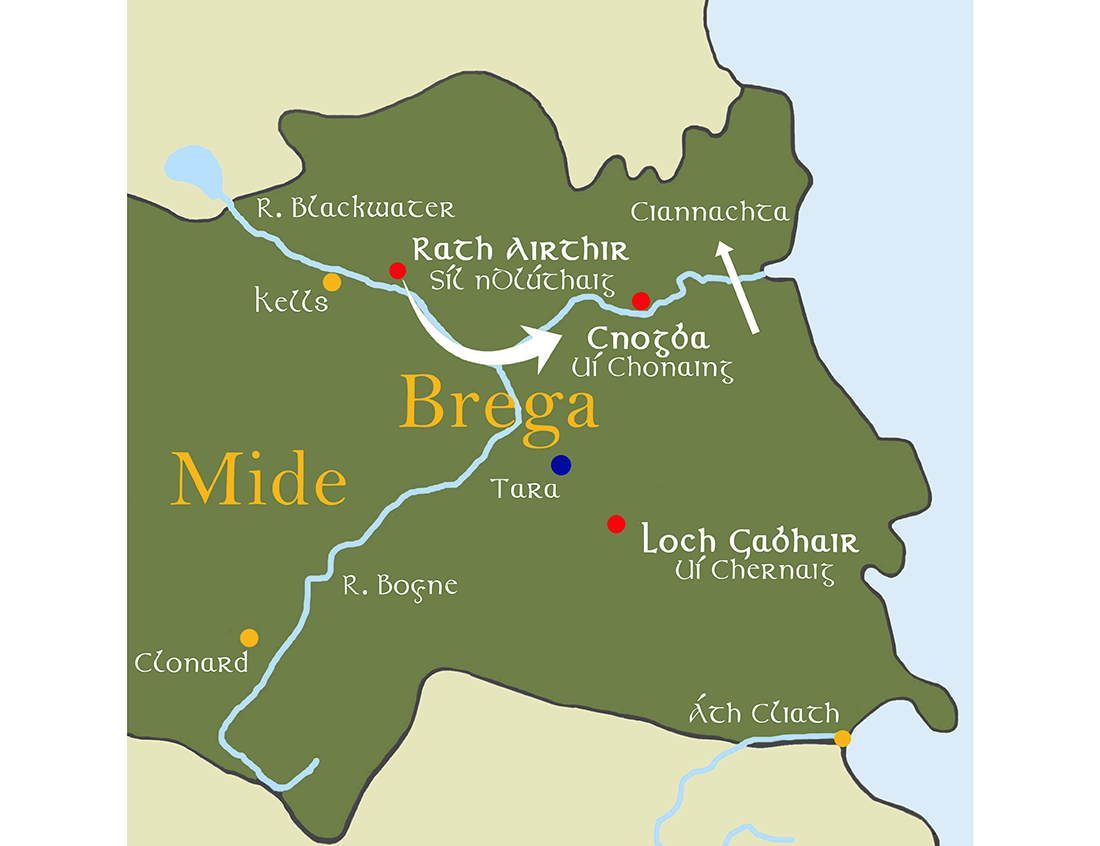
Síl nDlúthaig

Mugdorna Breg

Uí Raghallaigh
References
- Francis John Byrne, Irish Kings and High Kings (London, 1973), p. 88
 Beyond the Borora